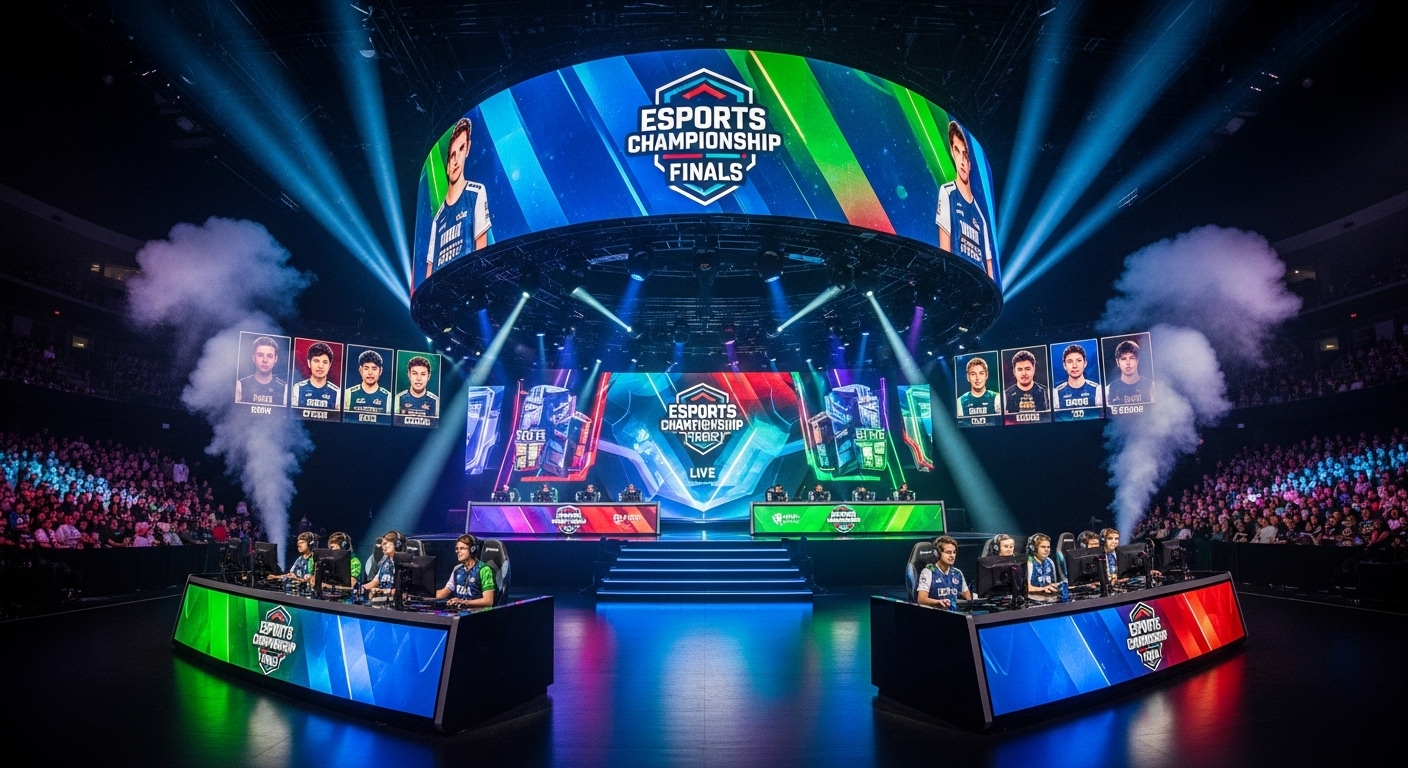
The world of competitive gaming, or esports, has exploded in popularity over the past few decades, evolving from a niche hobby into a global cultural and economic powerhouse. Today, esports tournaments fill massive arenas, attract millions of viewers worldwide, and offer multi-million-dollar prize pools, rivaling traditional sports in terms of audience size and revenue. This article explores the rise of esports, its impact on the global entertainment industry, and the exciting future that lies ahead for the world of competitive gaming.
The Origins of Esports: A Niche Hobby to Global Phenomenon
Esports may seem like a modern creation, but its roots date back several decades. The concept of competitive gaming began to take shape in the early 1970s when games like Pong and Space Invaders became a mainstream attraction. However, it wasn’t until the early 1990s that esports began to resemble the competitive scene we recognize today.
The first known competitive gaming event was held in 1972 at Stanford University, where students competed in a Spacewar tournament. While it was a small-scale event with little fanfare, it marked the beginning of competitive video gaming. Throughout the 1980s and 1990s, video game enthusiasts started gathering for LAN (Local Area Network) parties where they could play games like Warcraft, Quake, and StarCraft against each other. This laid the foundation for esports by fostering a competitive spirit among gamers.
In 1997, the Red Annihilation tournament for Quake was held, one of the first major online competitions. This tournament, which offered a cash prize, attracted a significant number of participants and viewers, signaling the potential for professional gaming. As internet access and gaming infrastructure improved in the late 1990s and early 2000s, online gaming platforms began to emerge, and esports began its rise to prominence.
The Professionalization of Esports: Turning Passion into a Career
The 2000s marked a critical turning point for esports as it began to evolve from small, grassroots competitions to professionalized leagues and tournaments. Key games such as Warcraft III, Counter-Strike, and StarCraft became the foundation for competitive gaming. Major events like the World Cyber Games (WCG), founded in 2000, helped establish esports as a legitimate form of competition on the global stage. These early tournaments had modest prize pools compared to today’s standards, but they were instrumental in raising awareness and attracting a dedicated fan base.
The real boom in esports began with the rise of League of Legends (LoL) in 2009. Developed by Riot Games, LoL quickly became one of the most popular and widely played esports titles in history. Riot Games’ commitment to professionalizing the esports scene, including organizing the first League of Legends World Championship in 2011, set a new standard for esports tournaments. This was a game-changer for the industry, proving that esports could be not only competitive but also profitable, with millions of viewers watching the tournaments live.
The creation of professional leagues and regular competitions for games like Dota 2, Overwatch, and Counter-Strike: Global Offensive further solidified esports’ place in the global entertainment landscape. Esports players began to sign contracts with professional organizations, forming dedicated teams with full-time training schedules, coaches, analysts, and even team psychologists to help them maintain peak performance.
The Esports Economy: A Booming Industry
Today, esports is a billion-dollar industry, with multiple revenue streams contributing to its rapid growth. Sponsorships, media rights, ticket sales, merchandise, and streaming services all play a critical role in the financial success of esports.
One of the most significant drivers of esports’ economic success is sponsorship. Brands from industries as diverse as technology, automotive, and even food and beverage are now investing heavily in esports. Major sponsors like Intel, Red Bull, Coca-Cola, and Mercedes-Benz have all signed deals with esports teams, tournaments, and streaming platforms. These partnerships provide crucial funding for players and organizers, while also offering companies a unique opportunity to market their products to a younger, tech-savvy demographic.
Streaming platforms such as Twitch, YouTube Gaming, and Facebook Gaming have become essential to the growth of esports. These platforms not only provide a way for fans to watch live tournaments and gameplay but also offer a space for content creators and streamers to interact with their audiences. The monetization of streaming through ads, subscriptions, and donations has turned some esports personalities into full-time influencers, further expanding the ecosystem.
Another key revenue source is media rights. As esports’ popularity has grown, traditional media networks such as ESPN and TBS have started broadcasting major tournaments. The League of Legends World Championship, The International (Dota 2), and Overwatch League have all been broadcast on national television in various countries, exposing esports to a wider audience. These media rights deals, along with the ability to stream events online, have brought in significant revenue, making esports a viable business for organizers and players alike.
The merchandise industry surrounding esports has also seen rapid growth. Fans of esports teams and players often purchase jerseys, hats, and other fan gear to support their favorite organizations. Additionally, major tournaments sell tickets for in-person events, attracting thousands of fans who want to experience the excitement live. These revenue streams, combined with sponsorships and streaming, have helped create a robust economic ecosystem around esports.
The Global Appeal of Esports
One of the most compelling aspects of esports is its global appeal. Unlike traditional sports, which are often limited by geographical boundaries, esports transcends borders. Players from all over the world can compete against each other in real time, no matter where they are located.
Esports has been particularly popular in countries such as South Korea, China, and the United States, where the gaming infrastructure and fanbase are well-established. South Korea is often regarded as the birthplace of modern esports, thanks to the country’s early investment in broadband internet infrastructure and government support for gaming as a professional sport. The country’s success in games like StarCraft and League of Legends has made it a global hub for esports.
China has become another esports powerhouse, with some of the largest esports organizations and tournaments in the world. The Chinese government has even recognized esports as an official sport, further fueling its growth. As China’s esports scene continues to develop, it is likely to become an even more significant player on the global stage.
In the United States, esports has seen a rapid rise in popularity over the past decade, thanks in part to the rise of streaming platforms like Twitch. American esports teams have become household names, and major tournaments like EVO and BlizzCon attract large audiences both online and in person.
Esports is not confined to just these regions, however. Southeast Asia, Europe, and Latin America are also key players in the global esports ecosystem, with countries like Brazil and the Philippines showing growing interest in competitive gaming. As internet access continues to improve in emerging markets, esports is expected to expand even further.
Esports in the Olympics: A Possible Future?
As esports continues to gain traction, one of the most exciting discussions surrounding its future is the potential inclusion of competitive gaming in the Olympic Games. While the idea is still controversial, the Olympic Committee has shown interest in the idea of incorporating esports into the global sporting event.
Several factors make esports an appealing addition to the Olympics. First, esports has a huge, global fanbase that spans multiple age groups, making it a potential way to engage a younger audience. Second, esports has already established itself as a competitive, organized form of sport with professional players, teams, and leagues. Finally, esports competitions take place in a virtual arena, making them accessible to people worldwide, regardless of their location or physical ability.
However, there are challenges to overcome before esports can make its Olympic debut. The most significant obstacle is the question of whether esports can truly be considered a “sport” in the traditional sense. Additionally, the Olympic Games typically feature physical competition, and esports is often viewed as a mental or strategic competition rather than a physical one.
Despite these challenges, the growing influence of esports in global entertainment and its alignment with the values of competition, teamwork, and skill development makes its potential inclusion in the Olympics an exciting prospect for the future.
The Future of Esports: Immersive Experiences and Continued Growth
Looking ahead, the future of esports is incredibly promising. One of the most exciting developments is the integration of Virtual Reality (VR) and Augmented Reality (AR) into competitive gaming. As VR and AR technology continues to improve, it’s likely that esports will adopt these innovations to create even more immersive gaming experiences. Imagine playing or watching an esports event where you’re fully immersed in the game world, interacting with the environment and other players in a 360-degree virtual space.
Mobile gaming is another area of growth in esports. As smartphones become more powerful, mobile esports titles such as PUBG Mobile, Mobile Legends, and Clash Royale are growing in popularity. This opens up new markets and opportunities for competitive gaming in regions where console and PC gaming may not be as accessible.
Additionally, the rise of college esports in North America represents a new avenue for young gamers to pursue competitive gaming as a career while earning an education. Many universities now offer esports scholarships and have established esports teams, creating a pathway for the next generation of players to enter the professional scene.
Finally, as esports continues to evolve, the potential for global partnerships and international leagues will continue to grow, bringing together players and fans from around the world to celebrate the universal love of gaming.