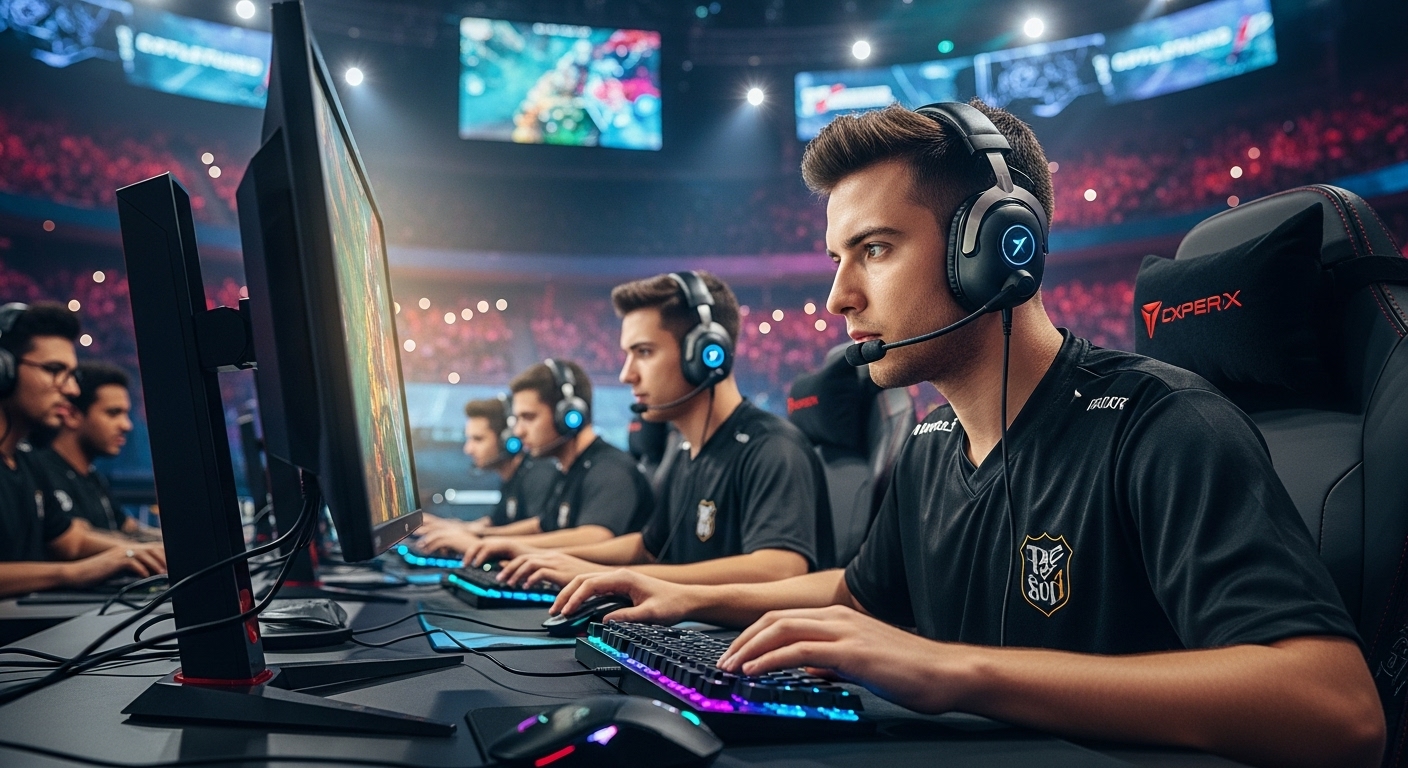
The world of Esports has evolved from a niche hobby to a billion-dollar global industry that rivals traditional sports in viewership, revenue, and cultural influence. What once began as small-scale gaming competitions among friends or local communities has transformed into international tournaments with massive audiences, corporate sponsorships, and professional athletes earning multi-million-dollar contracts. The Esports revolution is not just about video games; it is a reflection of how technology, entertainment, and community have merged to create a new era of competitive entertainment.
The Origins of Esports
The concept of Esports dates back to the early days of arcade and console gaming in the 1970s and 1980s. The first known video game competition took place at Stanford University in 1972, where players competed in a game called “Spacewar.” The prize was modest—a year’s subscription to Rolling Stone magazine—but it marked the beginning of organized competitive gaming. As arcade games gained popularity in the 1980s, tournaments became more common. Players would gather in arcades to compete in games like Pac-Man, Donkey Kong, and Street Fighter. The idea of being the best player in a particular game began to take hold, creating a sense of prestige among competitive gamers.
The rise of home gaming consoles in the 1990s, such as the Nintendo Entertainment System and Sega Genesis, expanded access to games and fueled the competitive spirit further. Nintendo even organized its own tournament series called the Nintendo World Championships in 1990, traveling across the United States to find the best players. These events hinted at what was to come—a structured, large-scale form of competitive gaming that would one day captivate millions.
The Internet and the Birth of Modern Esports
The late 1990s and early 2000s marked a turning point in the history of Esports. The rapid spread of the internet allowed gamers from all over the world to compete without being in the same room. Games like Quake, Counter-Strike, StarCraft, and Warcraft III became pioneers of online competitive gaming.
In South Korea, Esports began to flourish at a pace unmatched by any other country. The government’s investment in high-speed internet infrastructure made online gaming widely accessible, and titles like StarCraft quickly became national obsessions. Professional teams were formed, players gained celebrity status, and dedicated Esports television channels began broadcasting tournaments to millions of viewers. South Korea became the birthplace of the modern Esports ecosystem, complete with coaches, analysts, sponsors, and structured leagues.
In the West, the growth was slower but steady. Organizations such as Major League Gaming (MLG) and Electronic Sports League (ESL) began hosting online and offline tournaments for popular games. LAN parties, where players connected their computers in person to compete, became cultural phenomena. This period established the foundation for the Esports structure we know today: leagues, professional teams, and international tournaments.
The Explosion of Esports in the 2010s
The 2010s were the decade when Esports truly entered the mainstream. Several key factors contributed to this explosion: live streaming platforms, social media engagement, and the professionalization of gaming organizations.
Platforms like Twitch and YouTube Gaming made it easy for anyone to broadcast gameplay to a global audience. Fans could now watch their favorite players compete in real time, interact through live chat, and become part of a vibrant online community. This accessibility fueled Esports viewership, helping games like League of Legends, Dota 2, and Counter-Strike: Global Offensive reach millions of fans.
The establishment of major tournaments also helped legitimize Esports. The League of Legends World Championship, The International for Dota 2, and the Fortnite World Cup became global spectacles with massive prize pools. The International 2019 had a record-breaking prize pool of over $34 million, crowdfunded by the gaming community. These events drew audiences comparable to major traditional sporting events, with live streams attracting tens of millions of viewers worldwide.
Professional Players and Teams
Today, professional Esports players are considered athletes in their own right. They undergo rigorous training schedules, practice strategies, and maintain physical and mental fitness to perform at the highest level. Top-tier teams such as Team Liquid, Fnatic, Cloud9, T1, and G2 Esports operate like traditional sports franchises, complete with coaching staff, analysts, nutritionists, and psychologists.
Professional gamers often start young, honing their skills from their teenage years. However, competition is fierce, and the lifespan of a professional Esports career can be short. Reflexes and mental stamina play a critical role, and as the level of competition rises, maintaining peak performance becomes increasingly difficult. Despite the challenges, the rewards are substantial. Many players earn significant salaries, sponsorship deals, and prize money, while also building personal brands through streaming and social media.
The Business of Esports
The business side of Esports has become as complex and dynamic as the competition itself. The industry generates revenue through sponsorships, advertising, media rights, ticket sales, and merchandise. Global corporations such as Coca-Cola, Intel, Red Bull, and Nike have entered the Esports space, recognizing its potential to reach younger, tech-savvy audiences.
Esports organizations are structured like professional sports teams, with ownership groups, player contracts, and management staff. Franchised leagues, such as the Overwatch League and Call of Duty League, have introduced a model similar to the NBA or NFL, with city-based teams and structured seasons. Investors from traditional sports backgrounds, including owners of football and basketball teams, have also entered the Esports market, seeing its potential for long-term growth.
Media rights are another major revenue stream. Broadcasting companies and streaming platforms compete for exclusive rights to air Esports tournaments. The popularity of Esports content has led to deals worth millions of dollars, as platforms seek to capture the attention of global gaming audiences.
The Role of Streaming and Content Creation
Streaming has been one of the most transformative forces behind the growth of Esports. Platforms like Twitch, YouTube Gaming, and Kick allow players and fans to interact directly, creating a continuous feedback loop between competition and community. Streamers who compete professionally often build loyal fanbases, using their influence to promote tournaments, merchandise, and sponsors.
Streaming has also blurred the line between professional and casual gaming. While only a small percentage of players compete at the highest level, millions stream for entertainment, creating an ecosystem where viewers feel connected to both the competitive and recreational aspects of gaming. This democratization of content has allowed Esports to grow beyond traditional limits, making it accessible to anyone with an internet connection.
The Impact of Esports on Popular Culture
Esports is now deeply embedded in global popular culture. Professional players and teams have become household names, and gaming references are common in mainstream media. Documentaries, films, and TV shows exploring Esports have brought the industry into the spotlight, while collaborations between gaming brands and fashion, music, and entertainment sectors have further expanded its cultural footprint.
Music festivals and gaming events often feature Esports tournaments, and virtual concerts inside games have attracted millions of participants. For example, the crossover between music and gaming has led to collaborations with artists performing in digital spaces within games like Fortnite and Roblox. This synergy highlights how Esports has transcended the boundaries of gaming to influence art, entertainment, and lifestyle.
Esports in Education and Career Development
Esports has also entered the educational space. Universities and high schools around the world now offer Esports scholarships, degrees in game management, and competitive teams representing their institutions. These programs not only focus on gameplay but also teach students about marketing, event management, broadcasting, and game design—skills that are increasingly relevant in the growing digital economy.
Career opportunities in Esports extend far beyond professional play. There are roles in coaching, analysis, broadcasting, production, event organization, and marketing. The ecosystem surrounding Esports continues to expand, creating opportunities for people passionate about gaming to turn it into a sustainable career path.
The Global Esports Market
The global Esports market has grown exponentially in the past decade. According to industry reports, Esports revenues have surpassed the billion-dollar mark, and viewership continues to rise each year. Asia remains the largest market, with China and South Korea leading in both player base and audience size. North America and Europe follow closely, with growing infrastructure and increasing investment from both the private and public sectors.
Esports events now fill entire stadiums, and online audiences reach tens of millions. Major cities host Esports arenas equipped with advanced technology, lighting, and broadcasting systems. The scale of production for events like the League of Legends World Championship rivals that of the Olympic Games opening ceremonies, highlighting just how far competitive gaming has come.
Challenges Facing the Esports Industry
Despite its success, Esports faces several challenges that could shape its future. One major issue is player burnout. The intense pressure, long practice hours, and constant travel can take a toll on mental health. Many organizations are now investing in player wellness programs and balanced schedules to address this issue.
Another challenge is sustainability. While prize pools and sponsorships bring in revenue, profitability remains a concern for many teams and leagues. The industry is still experimenting with monetization models that balance the interests of players, organizations, and fans.
Additionally, Esports faces regulatory and ethical challenges, including issues of cheating, match-fixing, and performance-enhancing drugs. As Esports grows more professional, governing bodies are working to establish standardized rules and oversight mechanisms to ensure fair competition.
Esports and Traditional Sports: A New Rivalry or Partnership?
Esports and traditional sports have often been compared, with debates about whether gaming should be considered a “real” sport. However, the two worlds are increasingly intersecting rather than competing. Many sports franchises have launched their own Esports teams, and professional athletes are investing in or even participating in gaming tournaments.
Events like the FIFA eWorld Cup and NBA 2K League represent direct digital extensions of traditional sports. These competitions allow fans to engage with their favorite sports in new ways and provide opportunities for crossover audiences. The International Olympic Committee has also recognized Esports as a legitimate form of competition, paving the way for potential inclusion in future Olympic events.
The Future of Esports
The future of Esports looks bright, driven by technological innovation and global connectivity. Advancements in virtual reality, augmented reality, and cloud gaming will further enhance the immersive experience for both players and viewers. Artificial intelligence could also play a role in training and performance analysis, helping teams refine their strategies with data-driven insights.
The continued integration of Esports into education, entertainment, and media suggests that it will remain a dominant force in the digital age. As new generations grow up watching and playing games, the line between Esports and mainstream entertainment will blur even further.
Conclusion
Esports has come a long way from its humble beginnings in university labs and local arcades. It has evolved into a global powerhouse that combines competition, technology, and community in a way no other medium can. The rise of Esports represents more than just the popularity of video games—it symbolizes a shift in how people connect, entertain, and express themselves in the digital era.
As the industry continues to mature, it will face challenges but also endless opportunities. Esports is not just the future of gaming; it is a new chapter in the story of human competition and creativity. Whether you are a player, a fan, or simply a curious observer, one thing is clear—the world of Esports is here to stay, and its journey is only just beginning.